



Texas Country Ford Brake Service
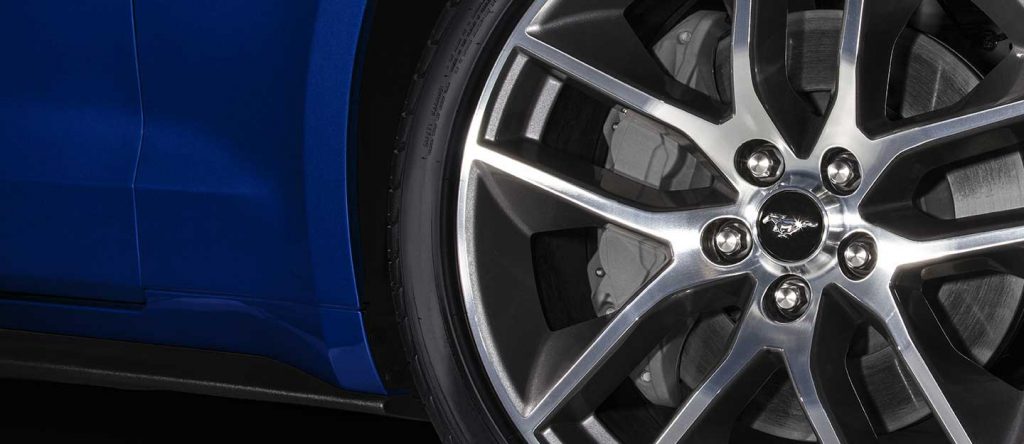
Your vehicle's brakes
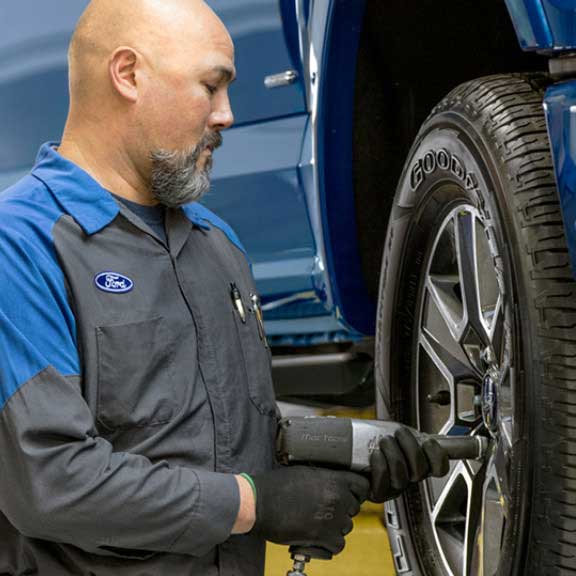
When you press your brake pedal, a complex system goes into motion to help keep you and your passengers safe. That’s why it’s so important to have highly skilled technicians service your brakes. At Texas Country Ford, we have the right parts, tools and certified-trained technicians to take care of your every need.
Brake Offers
Complimentary Brake Inspection*
Lifetime Brake Pad Guarantee*
Ford Mobile Service

How can I tell if my brakes need servicing?
The brake system is one of the most important safety mechanisms in your vehicle. It is necessary to have it inspected regularly to ensure proper performance. We recommend a brake inspection by one of our expert technicians at every maintenance visit to ensure proper performance.
Have your brakes inspected immediately if a continuous grinding or squeal sound is present, or if the vehicle has vibration or shudder in the steering wheel while braking
Why should I choose Texas Country Ford for brake repair?
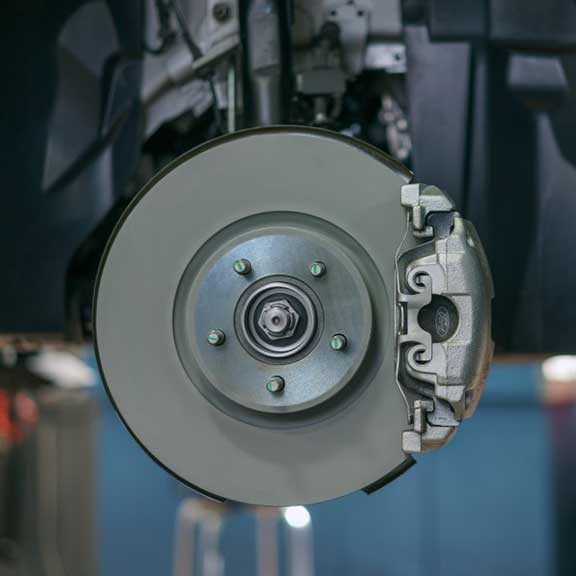
- Checking for even wear and measuring brake pad/shoe thickness
- Ensuring brake lines and master and wheel cylinders aren’t leaking
- Checking rotors for hot spots and run-outs
- Inspecting calipers for wear, fluid leaks and movement
- Checking anti-lock brake sensors
- Testing hardware and making necessary adjustments
- Checking brake fluid condition and levels
Other benefits of Texas Country Ford brake services include:
- Original equipment manufacturer (OEM) parts
- Full-service maintenance and repair facility
- Parts and labor warranties
- Clean, comfortable waiting areas with free Wi-Fi
- Shuttle service to and from your home
- Friendly and knowledgeable staff
FordPassTM Rewards Visa® Card
*See the FordPass™ Rewards Visa® Terms and Conditions in the Summary of Credit Terms. Points are not redeemable for cash. Please see the FordPassTM Rewards Program terms and conditions at FordPassRewards.com for information regarding expiration, redemption, forfeiture and other limitations on FordPass™ Rewards Points. Must be enrolled in FordPassTM Rewards.

Questions About Brakes?Let us Help!
Brake Service Advice
Write a note below and one of our friendly service experts will get you an answer.
This site is protected by reCAPTCHA and the Google Privacy Policy and Terms of Service apply.
Why Brake Service Cannot Wait in Winnsboro
Brakes are the one system where putting it off changes the outcome. Everything else gives you a warning light, a rough idle, a puddle in the driveway. Brakes wear quietly, in millimeters, across thousands of stops you never think about, and the first unmistakable sign is usually the expensive one.
Texas raised the stakes on that. Since January 1, 2025, non commercial vehicles here no longer need an annual safety inspection to register. Nobody looks at your brakes on a schedule anymore unless you ask someone to. The wear indicator built into the pad is the last automatic warning the vehicle gives you, and it does not speak until the friction material is down to the final 2 to 3 millimeters.
The information in this article is general guidance and does not constitute a specific diagnostic or repair recommendation for any individual vehicle. Repair and maintenance decisions should be made in consultation with a certified technician based on the specific condition of your vehicle.
Cited Source: Texas Department of Public Safety — Vehicle Safety Inspection Program changes under House Bill 3297 | Texas DPS Inspection Criteria — confirms non-commercial safety inspections remain discontinued as of March 2026
What Your Brakes Are Telling You, and What Ignoring It Costs
| Warning sign | What it usually means | What waiting costs you |
|---|---|---|
| A pull to one side when braking | One wheel is doing more stopping work than the wheel opposite it, usually a sticking caliper or a failing brake hose. | Uneven pad and rotor wear on top of the original fault, and longer stopping distances every mile until it is fixed. |
| A high pitched squeal | The hardened steel wear indicator tab is touching the rotor by design, at roughly the last 2 to 3 millimeters of pad. | This is the cheap window. Book now and it stays a pad job. |
| A grinding noise | The friction material is gone and the steel backing plate is cutting into the rotor. | Rotors gouged beyond machining, heat damage to caliper seals, and a far larger repair bill. |
| A soft or spongy pedal | Air in the hydraulic lines, moisture that has lowered the fluid boiling point, or a leaking master cylinder seal. | Increasing stopping distance and the risk of pedal fade when you need the brakes most. |
The information in this article is general guidance and does not constitute a specific diagnostic or repair recommendation for any individual vehicle. Repair and maintenance decisions should be made in consultation with a certified technician based on the specific condition of your vehicle.
Cited Source: Fix My Car Sound and Direct Brakes — wear indicator operation, backing-plate contact damage and spongy pedal causes
Case Study: A Pull to One Side
A pull under braking is worth walking through, because it shows why brakes get diagnosed rather than guessed at. The cause is almost never alignment. It is a braking force imbalance across one axle, most often a seized caliper, a brake hose that has collapsed internally and is acting as a one way valve, or pads contaminated by oil or leaking fluid.
Direction is a clue, not a verdict. A caliper clamping too hard pulls the vehicle toward that corner. One barely clamping at all pulls it away from the failed side. Tire pressure and worn front suspension contribute as well. Replacing pads without finding the fault just resets the clock, which is why diagnosis comes first and parts come second.
Cited Source: NRS Brakes, The Mobile Car Guys and Nelson’s Auto Repair — brake-pull cause ranking, collapsed-hose mechanism and pull direction
Pad Thickness and the Cost of Waiting
There is no federal safety standard that applies to brake pads at all. The figures circulating online as a legal limit come from the Federal Motor Carrier Safety Regulations, which govern commercial vehicles, not the truck in your driveway. What exists instead is a service standard, and these are the numbers that decide what your brake job costs.
| Remaining friction material | What it means for your vehicle |
|---|---|
| 10 to 12 millimeters | A new set of pads, with its full service life ahead of it. |
| 3 to 4 millimeters | The replacement window. Change them here and your rotors stay reusable. |
| 2 to 3 millimeters | The wear indicator starts to squeal. This is the vehicle’s last automatic warning. |
| None left | The steel backing plate is riding on the rotor. Rotor damage is already happening. |
That gap is the whole argument for regular inspection. Run past the window and the backing plate rides on the rotor, cutting grooves that cannot be machined out. A pad replacement becomes a pad and rotor replacement, and stopping distance grows the entire time it is happening.
Cited Source: NHTSA Office of Chief Counsel interpretation GF009226 — “There is no Federal motor vehicle safety standard (FMVSS) specifically applicable to brake pads” | 49 CFR § 393.47 — federal brake lining and pad thickness limits for commercial motor vehicles | Core Brake Parts and Engineer Fix — passenger-vehicle service thresholds
What a Brake Inspection at Texas Country Ford Covers
What the technician measures
A full inspection at our Winnsboro service center takes roughly 30 to 45 minutes. It is not a glance through the wheel spokes. The vehicle is road tested, lifted, and all four wheels come off so the hardware is measured rather than estimated.
- Visual inspection of calipers, wheel cylinders and hydraulic lines
- Friction material measured at all four corners
- Rotor thickness and surface runout measured with a micrometer
- Brake fluid tested for moisture and copper content
- Parking brake mechanism and cables checked for operation
Why the brake fluid gets tested too
Brake fluid is the part most drivers never think about. Glycol based fluid absorbs moisture from the air, which drops its boiling point and corrodes the system from the inside. Technicians read copper content on a test strip because copper tracks the breakdown of the inhibitors protecting your calipers and master cylinder. Motorist Assurance Program guidelines call for replacement above 200 parts per million, and the test takes under a minute. Current Ford brake offers, including the complimentary brake inspection, appear above on this page.◊
◊ Service offers, coupons and manufacturer rebates are time-limited and subject to change or cancellation without notice. Eligibility, rebate amounts, per-vehicle claim limits and submission deadlines vary by offer and may require purchase and installation of qualifying parts at a participating dealer. See the current offers on this page or ask your service advisor for complete terms.
Our factory trained technicians work on Fords every day, fit genuine Ford parts from our parts counter and back the work with parts and labor coverage.‖
‖ This information is provided for general educational purposes only and does not constitute legal advice. Warranty coverage depends on the specific terms of your vehicle’s warranty agreement. Consult your owner’s manual or a qualified legal professional for guidance on your individual situation.
Cited Source: Ford Brake Service — Complimentary Brake Inspection and Lifetime Brake Pad Guarantee program terms | ALLDATA, Dorman Shop Press and Vehicle Service Pros — brake fluid moisture and copper testing, Motorist Assurance Program Uniform Inspection and Communication Standards 200 ppm replacement threshold
Towing and Hauling Shorten the Interval
If you pull a boat or a camper up toward Lake Bob Sandlin, your brakes are not living the same life as a commuter vehicle. Heat builds under load and never sheds between stops, so pads and rotors wear faster and fade becomes a real risk on a long descent with weight behind you. The practical answer is a shorter inspection interval, not a longer one.
It also changes what should go back on the truck. Semi metallic pads handle sustained heat far better than ceramic compounds, which can glaze under repeated hard braking and leave you with a firm pedal and less stopping force than you expected. They belong on large vented rotors, never solid ones, because vented construction is what sheds heat under load. Tell your advisor how you use the truck and the parts get specified accordingly.
Cited Source: AutoZone and Core Brake Parts — pad compound selection for towing and vented rotor guidance
Brake Questions We Hear in the Service Lane
How often should brake fluid be tested or replaced?
Have it checked at every annual service. No single interval fits every vehicle, because moisture absorption tracks time and humidity rather than mileage. Copper and moisture readings tell the technician whether a flush is due.
Do rotors have to be replaced every time the pads are?
No. A rotor can be resurfaced if it still clears the manufacturer minimum thickness after the cut, since machining removes material from both faces. If it will not clear that figure, or it is deeply grooved or heavily corroded, it gets replaced alongside the pads.
Is a brake pull safe to drive on until my next service visit?
It should be diagnosed before highway driving. The imbalance that causes the pull is also quietly wearing one corner faster than the other, so the repair gets larger the longer it waits.
Can I keep driving with a grinding noise?
No, and the reason is cost as much as safety. At that stage the repair is already growing: the gouging cannot be machined out, and heat works on the caliper seals next. Every mile you drive on it adds parts to the estimate.
Cited Source: Ford Brake Service — Ford guidance on pad wear thresholds and when rotors are replaced with pads | Crown Auto Service and Oil and Miles — minimum machine thickness versus discard thickness
Book the Inspection Before the Noise Changes
A pull, a squeal, a soft pedal: they all carry the same message, which is that something has moved out of balance and brakes do not heal on their own. The inspection that finds it takes under an hour. The repair that follows is almost always smaller than the one you get by waiting. More guidance lives in our Service & Parts Tips hub, alongside oil change and tire care.
Disclaimers
The information in this article is general guidance and does not constitute a specific diagnostic or repair recommendation for any individual vehicle. Repair and maintenance decisions should be made in consultation with a certified technician based on the specific condition of your vehicle.
◊ Service offers, coupons and manufacturer rebates are time-limited and subject to change or cancellation without notice. Eligibility, rebate amounts, per-vehicle claim limits and submission deadlines vary by offer and may require purchase and installation of qualifying parts at a participating dealer. See the current offers on this page or ask your service advisor for complete terms.
‖ This information is provided for general educational purposes only and does not constitute legal advice. Warranty coverage depends on the specific terms of your vehicle’s warranty agreement. Consult your owner’s manual or a qualified legal professional for guidance on your individual situation.
Cited Sources
Texas Department of Public Safety and Texas DPS Inspection Criteria — Vehicle Safety Inspection Program changes under House Bill 3297 | NHTSA Office of Chief Counsel interpretation GF009226 — no FMVSS applies specifically to brake pads | 49 CFR § 393.47 — federal brake lining and pad thickness limits for commercial motor vehicles | Ford Brake Service — Complimentary Brake Inspection, Lifetime Brake Pad Guarantee and Ford brake wear guidance | Fix My Car Sound and Direct Brakes — wear indicator operation and spongy pedal causes | NRS Brakes, The Mobile Car Guys and Nelson’s Auto Repair — brake-pull diagnosis | Core Brake Parts and Engineer Fix — passenger-vehicle pad thickness thresholds | ALLDATA, Dorman Shop Press and Vehicle Service Pros — brake fluid copper testing and MAP UICS 200 ppm standard | Crown Auto Service and Oil and Miles — rotor minimum machine versus discard thickness | AutoZone and Core Brake Parts — pad compound and rotor selection for towing

